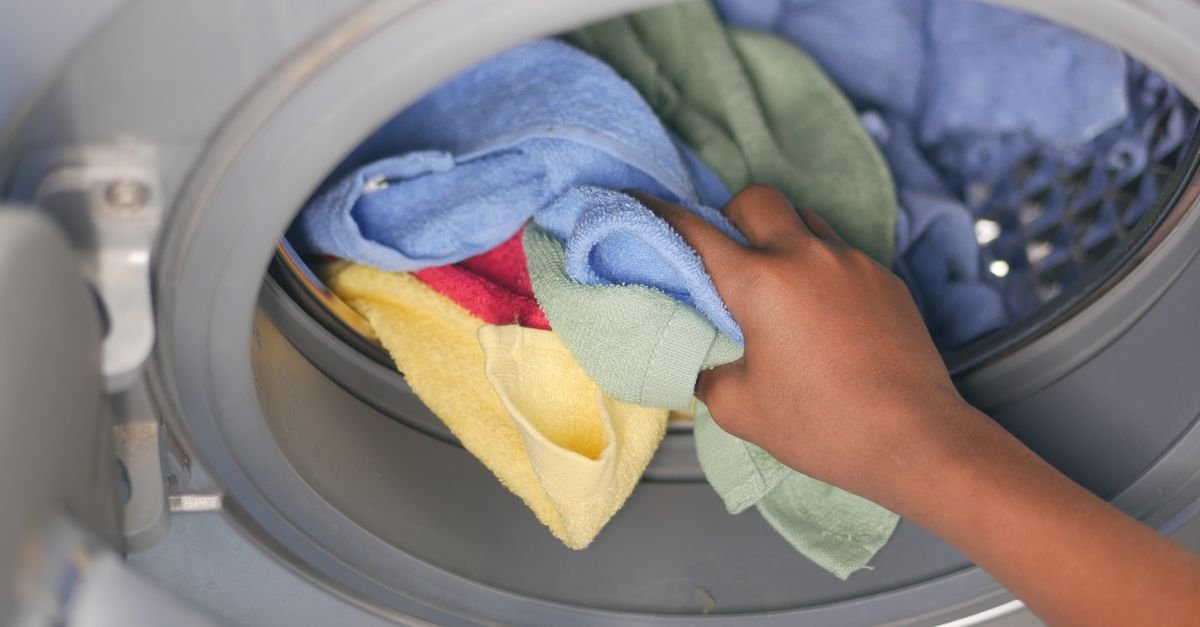
To clean a smelly front-load washer gasket, remove trapped debris, wipe the rubber folds with warm water and mild detergent, rinse, and dry the seal completely. Then leave the door ajar between loads, remove wet laundry promptly, use the correct high-efficiency detergent in the recommended amount, and run the washer’s cleaning cycle according to the owner’s manual. Moisture and residue are the recurring causes behind many gasket odors.[1]
The black or gray material in the gasket may be a mixture of lint, detergent or fabric-softener residue, dirt, and mildew-like growth. You do not need to identify it before cleaning. The practical goal is to remove the buildup and keep the seal dry.
What you need
- Rubber or household cleaning gloves
- Two soft cloths or sponges
- Warm water
- A small soft brush or old toothbrush
- Mild detergent or an appliance cleaner approved by the washer manufacturer
- A dry towel
Check your washer’s care guide before using bleach, oxygen bleach, commercial mold products, or any cleaner not specifically approved for the appliance. Manufacturer instructions vary, and some models warn against particular products.[2]
How to clean the front-load washer gasket
- Empty the washer. Remove all clothing and make sure the drum is not holding water. If the machine has recently run, allow the gasket to cool before cleaning.
- Pull back the gasket folds. Gently inspect the entire rubber seal, especially the bottom portion and the space beneath the lip. Remove coins, lint, hair ties, socks, and other objects by hand.
- Wipe away loose residue. Use a dry or slightly damp cloth to remove loose dirt and lint before applying cleaner.
- Wash the seal. Mix warm water with a small amount of mild detergent, or use a cleaner approved in your washer’s manual. Wipe the outer surface, inner folds, and the area around the door glass. Use a soft brush for stubborn residue, but do not use an abrasive pad or sharp tool.
- Rinse the gasket. Wipe the seal again with a clean, damp cloth so detergent and loosened residue are removed rather than left behind.
- Dry every fold. Use a dry towel, reaching under the lip and into the bottom crevices. Leave the door open or ajar until the interior is dry.
Cleaning the gasket alone may not solve an odor if residue is also inside the drum, detergent dispenser, drain area, or other internal components. After cleaning the seal, run the washer’s dedicated Clean Washer, Tub Clean, or equivalent cycle if your model has one. Use only the cleaner and amount specified by the manufacturer.[1]
Should you use bleach on the gasket?
Not as your default first step. Start with detergent or an appliance-approved cleaner and thorough drying. The EPA does not recommend biocides such as chlorine bleach as a routine mold-cleanup practice; removing the buildup and correcting the moisture problem are more important.[4]
Some washer manufacturers do provide diluted bleach or oxygen-bleach instructions for stained gaskets. If your manual specifically permits it, follow that procedure exactly, ventilate the room, wear gloves, and rinse the gasket afterward. Never mix bleach with vinegar, ammonia, detergent, or another cleaner. Mixing household bleach with other products can create dangerous vapors.[3] [5]
If the gasket is torn, permanently distorted, or still produces a strong odor after cleaning the seal and running the appropriate washer-cleaning cycle, arrange appliance service. A damaged seal can also contribute to leaks.[2]
The routine that prevents the smell from returning
| Habit | Why it matters | Practical version |
|---|---|---|
| Dry the gasket | Water remains in the folds after a wash. | Wipe the seal after the last load of the day, or after every load if the gasket stays visibly wet. |
| Vent the washer | A closed door slows drying inside the drum and gasket. | Leave the door ajar between loads when children and pets cannot access the opening. |
| Unload promptly | Wet laundry adds moisture and can develop a stale smell while sitting. | Move clothes to the dryer or drying rack soon after the cycle ends. |
| Measure detergent | Too much or the wrong type can leave residue and excess suds. | Use detergent labeled for high-efficiency washers when required, and follow the dose for your load and water conditions. |
| Clean the dispenser | Old detergent and softener can become another odor source. | Remove the drawer if the manual allows it, wash it with warm water, rinse, and dry it before replacing. |
| Run the washer-cleaning cycle | Gasket wiping does not clean the whole machine. | Follow the manual’s recommended frequency and product instructions. |
Failure-mode guide: why the odor keeps coming back
- The gasket looks clean, but the washer still smells: Check the detergent dispenser and run the manufacturer-approved cleaning cycle. Odor-causing residue may be elsewhere in the machine.[1]
- The smell returns after a few loads: The door may be closed while the gasket is still wet, or wet clothing may be sitting in the drum. Improve ventilation and unloading habits before reaching for a stronger cleaner.
- There is a sock or debris under the seal: Remove it and inspect the entire gasket. Trapped objects hold moisture and may contribute to odor or, if they damage the seal, leaking.[1]
- There are persistent dark stains: Clean the surface according to the manual, but do not scrub aggressively or use an unapproved solvent. Rubber can be damaged even when a stain remains.
- The laundry smells stale immediately after washing: Rewash the load promptly, check the washer for residue, and make sure the selected cycle and detergent amount suit the load. Do not simply add more detergent; excess product can worsen buildup.
A manageable maintenance schedule
- After each load: Remove clothing and check for trapped items. Leave the door ajar.
- At least weekly: Wipe the gasket folds and door glass if moisture or residue is visible.
- Periodically: Clean the gasket, dispenser, and washer interior according to the owner’s manual. LG provides guidance on periodic gasket cleaning in one of its support guides; your model may specify a different interval.[2]
- Whenever odor returns: Repeat the inspection rather than masking the smell. Look for wet laundry left behind, excess detergent, a blocked or dirty dispenser, or a gasket that is not drying.
Reader-value checklist: If you only have five minutes today, remove anything trapped in the gasket, wipe under the rubber lip with warm water and mild detergent, dry the folds, and leave the door ajar. If the odor remains, clean the dispenser and run the washer’s approved cleaning cycle next. This sequence targets the likely sources without exposing the gasket to unnecessary harsh chemicals.
For a broader, low-effort home-care routine, see the home maintenance chores worth your time.
Sources
- Cleaning a Front Load Washer Door Seal — Whirlpool Product Help
- LG Front Load Washing Machine Gasket: There Are Stains and Mold in the Door Gasket — LG USA Support
- Cleaning and Disinfecting with Bleach — Centers for Disease Control and Prevention
- Should I Use Bleach to Clean Up Mold? — U.S. Environmental Protection Agency
- Mold Cleanup Guidelines and Recommendations — Centers for Disease Control and Prevention