Short answer: choose an HVAC filter when you want filtration throughout the area served by your central system and your equipment can handle the filter’s rating. Choose a portable air purifier when you want stronger, more targeted cleaning in one room, such as a bedroom or living room. Many homes benefit from both: a correctly fitted HVAC filter for general particle control and a portable unit in the room where air quality matters most.
The important limit is that air cleaning is not the same as source control. Filters can capture some airborne particles, but they do not remove a water leak, lower high humidity, stop smoke at its source, or solve a mold problem. EPA recommends addressing pollutant sources and ventilation first, then using filtration as a supplement.[1]
HVAC filter vs. portable purifier: the practical difference
| What you need | Usually the better first choice | Why |
|---|---|---|
| Whole-home particle filtration | HVAC filter | It filters air that passes through the central heating or cooling system and can serve the area connected to that system. |
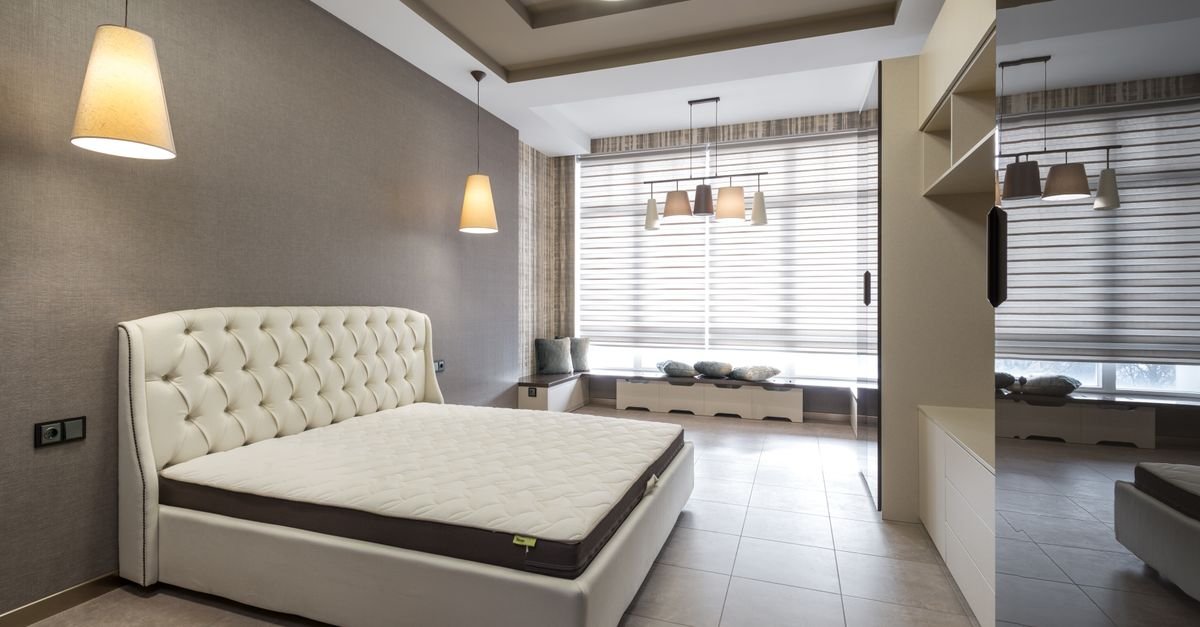
| Cleaner air in one bedroom or office | Portable air purifier | It operates in the room where you place it instead of waiting for the HVAC system to run. |
| Allergy or smoke concerns in one frequently used room | Portable purifier, or both | A properly sized unit can provide more focused filtration while the HVAC filter handles general circulation. |
| Musty smell or visible mold | Moisture investigation and cleanup | Filtration may remove some airborne particles or reduce some odors, but it does not correct the moisture source. |
| High indoor humidity | Dehumidification and moisture control | An air purifier is not a dehumidifier. |
| Cooking or cleaning odors | Source control, ventilation, and possibly carbon filtration | Particle filters do not automatically remove gases and odors; carbon performance depends on the product and the amount of carbon used. |
What an HVAC filter can—and cannot—do
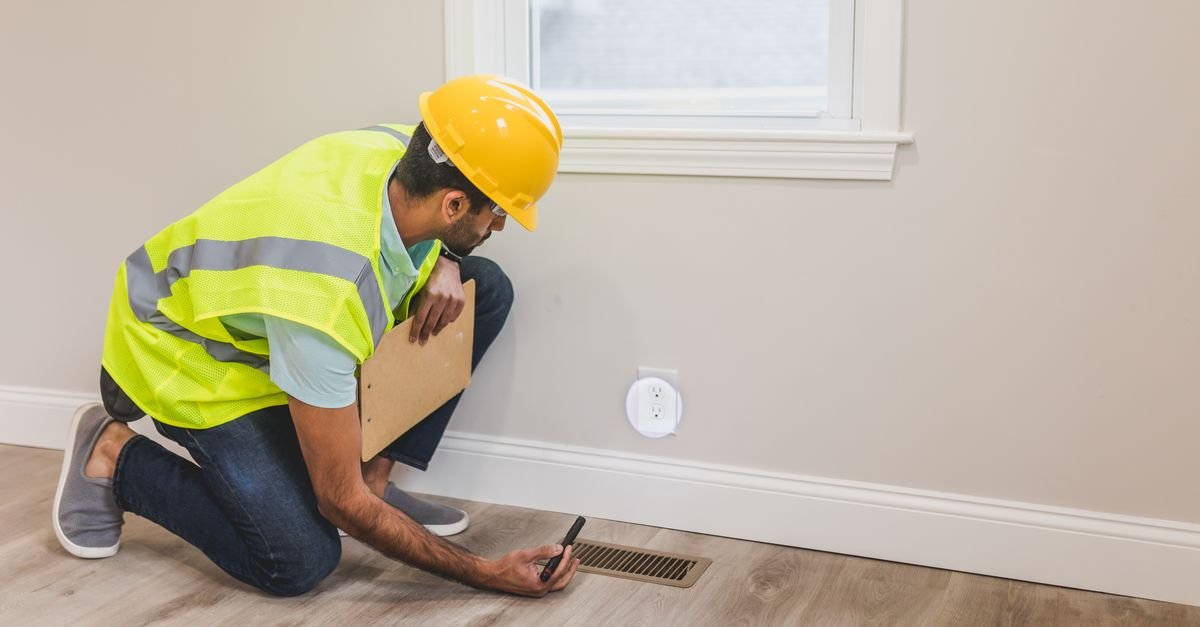
An HVAC filter only cleans air when air is moving through the system. In many homes, heating and cooling systems run for less than all day, so filtration is intermittent unless the system is deliberately operated more often. Longer run times can also affect electricity use and, during cooling season, humidity control.[1]
For particle removal, EPA advises choosing a filter rated MERV 13 or the highest rating your system fan and filter slot can accommodate. MERV is a standardized way to compare a filter’s ability to capture different particle sizes; a higher number generally indicates better capture of the tested particles.[2]
Do not assume that the highest number printed on a package is automatically best for your equipment. If the filter does not fit correctly, becomes overloaded quickly, or is too restrictive for the system, performance can suffer. Check the owner’s manual, equipment documentation, or the recommendation from a qualified HVAC professional before moving to a substantially higher-efficiency filter.
When an HVAC filter is the sensible purchase
- You want a basic level of filtration across several connected rooms.
- Your central system already runs regularly for heating or cooling.
- You can identify the correct filter size and a compatible MERV rating.
- You prefer not to dedicate floor or table space to another appliance.
Inspect the HVAC filter about once a month, especially during periods of heavy use. Follow the filter and equipment manufacturers’ instructions for the replacement interval, and replace it sooner if it is visibly loaded with dust, lint, or smoke residue. Pets, the number of occupants, the filter type, indoor particle levels, and how often the system runs can all affect how quickly a filter loads. After heavy smoke exposure, inspect the filter promptly and replace it if it is loaded or has absorbed smoke residue. EPA notes that all filters require regular replacement and that an overloaded filter will not work well.[1]
What a portable air purifier adds
A portable purifier is designed for a single room or area. Its advantage is control: you can place it where people spend the most time, run it independently of the HVAC schedule, and select a model sized for that room. EPA recommends comparing the unit’s clean air delivery rate, or CADR, with the room size. A higher CADR generally means the unit can filter more particles and serve a larger area.[1]
As a rough EPA sizing estimate for rooms with an 8-foot ceiling, the minimum CADR is about 65 cubic feet per minute for 100 square feet, 130 for 200 square feet, 195 for 300 square feet, and 260 for 400 square feet. Higher ceilings may require a higher CADR. Treat the numbers as a sizing aid, not a guarantee of identical performance in every room.[1]
For particles, look for a mechanical filter, often marketed as HEPA, and a CADR appropriate for the room. For gases and odors, look for activated carbon or another gas-removal filter. CADR ratings are intended for particle performance, not a universal measure of odor removal, so be cautious about broad claims that a small amount of carbon will eliminate every smell.[1]
When a portable purifier is the better first purchase
- One room is the main concern, such as a bedroom, nursery, office, or living room.
- A household member is especially sensitive to airborne particles or smoke.
- Your HVAC system cannot accommodate the filter rating you want.
- You want filtration even when the furnace or air conditioner is off.
- You are trying to reduce particles in a room where an odor or smoke source has already been controlled.
Can an air purifier fix a musty smell or mold?
No. A purifier may capture some airborne mold particles and, if it includes suitable gas filtration, may reduce some odors. But mold grows because of a moisture problem. The durable fix is to find and correct the leak, condensation, drainage, or humidity issue, then clean or remove affected materials appropriately. EPA and CDC both emphasize fixing the moisture problem rather than relying on air cleaning alone.[1] [4]
For general moisture control, EPA recommends keeping indoor relative humidity around 30% to 50%; consistently high humidity may require a specific dehumidification strategy.[3]
Be especially skeptical of a product marketed as a mold cure, odor cure, or whole-home solution without explaining the filtration method, room size, replacement schedule, and source-control limits. Avoid portable cleaners that intentionally produce ozone. EPA identifies ozone as a lung irritant and warns that some ionizing, electrostatic, plasma, or inadequately coated UV products may have ozone-emission concerns.[1]
A simple buying decision
- Identify the pollutant. Dust, pollen, smoke, and other particles call for particle filtration. Odors may require source control, ventilation, and possibly activated carbon. Moisture requires moisture control.
- Choose the coverage area. For several rooms served by central HVAC, start with a compatible HVAC filter. For one priority room, compare portable units by CADR and room size.
- Check compatibility. Confirm the HVAC filter size and the highest practical MERV rating before buying a denser filter.
- Plan for maintenance. Both approaches need replacement filters. Include filter availability, replacement frequency, noise, and energy use in the real cost.
- Place the portable unit correctly. Keep its air intake and outlet clear, and run it at a speed you can tolerate consistently. More airflow and longer operation generally mean more air filtered.
The bottom line
For most homeowners, the sensible sequence is: control the source, use a compatible HVAC filter for broad coverage, and add a properly sized portable purifier where extra particle filtration is useful. Do not buy an air purifier to solve high humidity, a leak, or visible mold. Those problems require a different remedy, and filtration works best as one part of a larger indoor-air-quality plan.
60-second decision checklist
- Several rooms: Start by checking whether your HVAC system can use MERV 13 or the highest compatible rating.
- One room: Compare portable units by CADR, not just the advertised room size.
- Allergies or smoke: Prioritize particle filtration and continuous operation in the most-used room.
- Odors: Find the source first; consider activated carbon only as a supplement.
- Musty smell, condensation, or mold: Investigate moisture instead of buying a larger purifier.
- Noise-sensitive household: Choose a unit that can deliver useful airflow at a tolerable setting, since a device that stays off provides no filtration.
Sources
- Guide to Air Cleaners in the Home — U.S. Environmental Protection Agency
- What is a MERV rating? — U.S. Environmental Protection Agency
- Biological Contaminants and Indoor Air Quality — U.S. Environmental Protection Agency
- Mold — Centers for Disease Control and Prevention