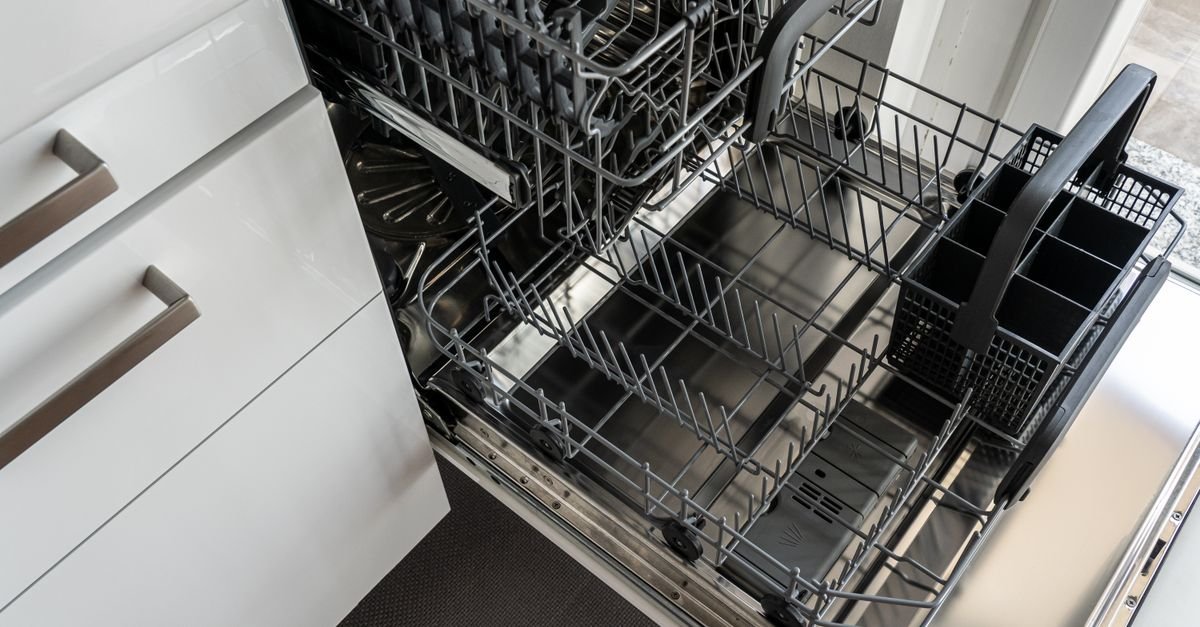
The quickest way to stop a dishwasher from smelling is to clean its filter and drain area, wipe the door gasket, and run an empty cleaning cycle recommended for your model. If the odor returns quickly, look for standing water, a blocked air gap or drain hose, or a drain hose that allows dirty sink water to flow back into the dishwasher. A small amount of water below the filter can be normal on some models, but water covering the filter or collecting in the tub is worth investigating.[1][4]
Dishwasher odor diagnosis at a glance
| What the smell is like | Likely cause | First thing to check |
|---|---|---|
| Rotten food, fish, or sour grease | Food residue in the filter, sump, spray arms, or tub | Remove and clean the filter; inspect the area beneath it for debris |
| Musty or mildew-like | Moisture and residue around the door gasket or interior | Wipe the gasket folds and leave the door slightly open after cycles |
| Sewage-like or dirty sink water | Standing water, a blocked drain path, or backflow from the sink | Check whether the dishwasher drains fully and inspect the air gap or hose routing |
| Burning plastic or electrical odor | An item may be touching the heating element, or a component may be overheating | Stop using the dishwasher and arrange service if the smell persists |
This table is a starting point, not a diagnosis. Odors can have more than one cause, especially when food residue and poor drainage occur together. Manufacturers commonly identify filters, food buildup, gaskets, and drainage problems as sources of dishwasher odor.[1][2][3]
1. Clean the filter and the area beneath it
In many dishwashers, the filter sits beneath the lower rack. It catches food particles so they are not repeatedly circulated through the wash water. When debris accumulates, it can contribute to odor and poorer cleaning performance.[1]
- Empty the dishwasher and remove the lower rack.
- Follow your owner’s manual to unlock and lift out the filter. Filter designs vary, so do not force a filter that does not twist or lift as expected.
- Rinse it under warm running water. Use a soft brush and mild soapy water for stuck-on residue.
- Inspect the recessed area below the filter for labels, seeds, bones, glass, or other debris. Remove only what you can reach safely; do not reach blindly into the pump area.
- Reinstall the filter and lock it firmly in place before running the dishwasher.
A monthly filter check is a reasonable starting routine for many households, particularly if the dishwasher runs frequently or dishes are heavily soiled. Some manufacturers recommend cleaning more often when debris accumulates, while certain models use a different filtration system. Your manual takes priority.[1][2]
2. Wipe the gasket, door edges, and tub
The rubber gasket around the door can trap moisture, grease, and food particles in its folds. That residue may create a musty smell even when the filter looks clean. Wipe the gasket, the bottom edge of the door, and the corners of the tub with warm water and a soft cloth or sponge. Use a small soft brush for crevices, then wipe the area dry.[1][3]
Do not use bleach automatically. Samsung cautions against bleach in dishwashers with stainless-steel interiors because it can damage or discolor the surface. Check your model’s instructions before using any disinfectant or specialty cleaner, and never mix cleaning products.[3]
3. Run an empty cleaning cycle
After cleaning the filter and gasket, run an empty cycle using a dishwasher cleaner approved for your appliance. Commercial dishwasher cleaners are designed to loosen grease and residue; Bosch recommends using its cleaner on a hot, long cycle for greasy buildup and its descaler separately for mineral deposits.[2]
Some manufacturers also describe white vinegar as an option, usually placed in a dishwasher-safe bowl on the bottom rack and run without detergent. Because cleaning recommendations differ by model and interior material, check the owner’s manual first. Do not pour vinegar and bleach into the appliance or combine vinegar with other cleaners.[1][3]
4. Check for standing water—not just a little water below the filter
A small amount of water in the filter area can be normal because it helps keep seals from drying out. The concern is water that covers the filter screen, remains across the bottom of the tub, or becomes visibly dirty between cycles.[4][5]
If water is not draining correctly:
- Clean the filter and inspect the sump area for accessible debris.
- Check the drain hose under the sink for kinks, crushing, or sagging.
- If your sink has an air gap, remove its cover and clear visible buildup according to the manufacturer’s instructions.
- If the dishwasher drains through a garbage disposal, make sure the sink drain is clear. A recently installed disposal may still have its dishwasher knockout plug in place.
- Look for a properly routed high loop or air gap. Without one of these protections, dirty sink water can flow back into the dishwasher.[5]
Do not pour chemical drain cleaner into the dishwasher. If cleaning the filter and checking the accessible drain path does not restore drainage, stop and arrange appliance service rather than disconnecting hoses or opening electrical panels.
5. Change the loading habits that create odor
Scrape large food particles into the trash or compost before loading, but do not assume every dish must be prewashed. Whirlpool advises scraping rather than fully rinsing dishes, and recommends a rinse-only or rinse-and-hold cycle when a partial load will sit for a while.[1]
- Do not overload the racks or block the spray arms.
- Remove labels, bones, toothpicks, and large scraps before loading.
- Run a rinse cycle if dirty dishes will remain inside for more than a day.
- After a cycle, leave the door slightly ajar if the design and surrounding cabinets allow it, so trapped moisture can escape.[3]
- Inspect the spray-arm openings if dishes remain dirty or food odor returns. Debris in the jets can reduce wash performance.[2]
A repeatable monthly dishwasher odor routine
- Remove and rinse the filter.
- Wipe the filter housing, sump edge, gasket, door edges, and tub corners.
- Check spray arms for blocked openings.
- Run an empty dishwasher-cleaning cycle according to the product label and owner’s manual.
- Confirm that the dishwasher drains and that no dirty water is backing up from the sink.
- Leave the door slightly open after future cycles when practical.
Put this routine on the same household calendar as other recurring chores. A home maintenance schedule can make appliance cleaning easier to remember without waiting for an odor to appear.
When a dishwasher smell means it is time for service
Arrange professional help if the odor persists after cleaning, the dishwasher repeatedly leaves dirty water, water backs up through the air gap, the unit leaks, or the drain pump does not appear to run. A recurring sewage-like smell can indicate a drainage or installation problem rather than a dirty interior.[1][5]
Stop using the appliance immediately if you smell burning, see damaged wiring, or notice repeated breaker trips. Those symptoms are outside routine cleaning and should be evaluated by a qualified technician.
Bottom line
Start with the filter, gasket, and drain area—not air fresheners or repeated short cycles. If the dishwasher drains normally and the odor disappears after a thorough cleaning, monthly maintenance and better loading habits may be enough. If dirty water returns or the smell is sewage-like, focus on the drain path and installation before assuming the appliance simply needs another cleaning.
Sources
- How to Get Rid of Dishwasher Smells in 5 Steps — Whirlpool
- How to Clean a Smelly Dishwasher | What Causes The Bad Smell? — Bosch Home Appliances
- Samsung Dishwasher stinks or has a musty smell — Samsung
- Water Remains In Filter Area - Dishwasher — Maytag
- Dishwasher - Water in the Bottom of the Tub — GE Appliances