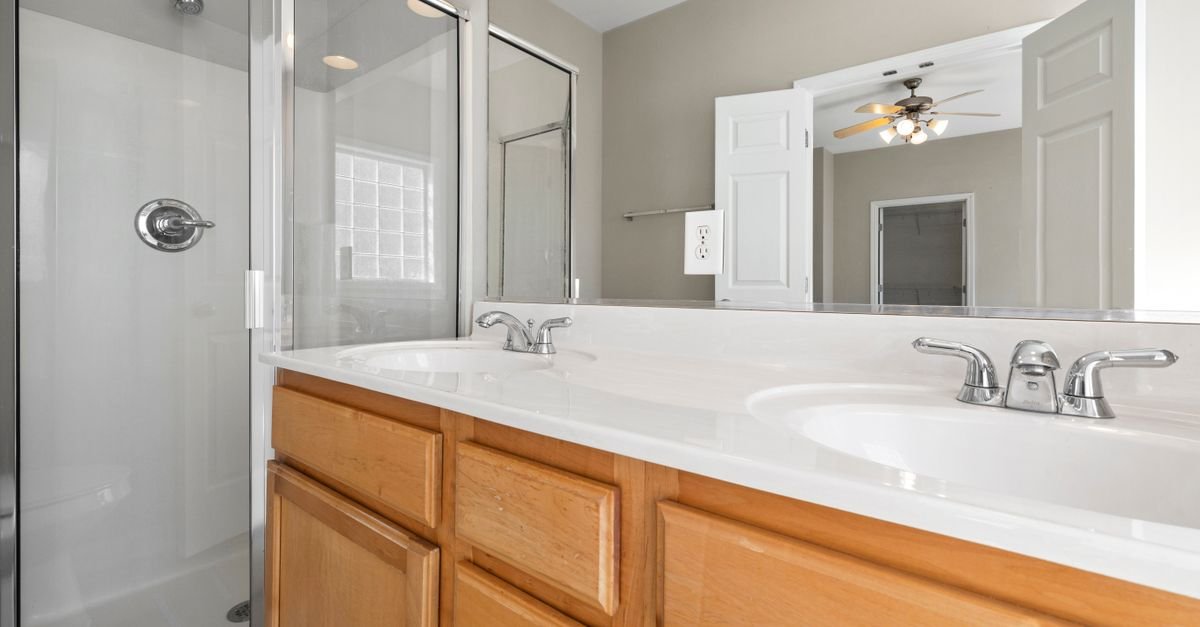
The quickest way to reduce bathroom moisture is to run the exhaust fan during the shower and keep it running afterward, while removing wet towels and drying obvious water on nearby surfaces. If the bathroom is still damp after that routine, check whether the fan actually vents outdoors, whether its grille is clogged, and whether the room has enough replacement air.
Bathrooms naturally produce a concentrated burst of water vapor. When that moisture stays in the room, it can condense on mirrors, walls, ceilings, windows, and pipes. Repeated condensation can contribute to musty smells and recurring mold or mildew, especially if there is also a leak or another source of dampness. The U.S. Environmental Protection Agency recommends using a bathroom exhaust fan that vents outdoors, or opening a window when conditions allow, during and after a shower.[1]
Try this post-shower moisture-control routine
This routine is designed for an ordinary bathroom with a working exhaust fan. Adjust it if your fan manual gives different operating instructions.
- Turn on the fan before or as the shower starts. Starting early gives the fan time to capture moisture near its source instead of waiting until the room is already fogged up.
- Use the door position that permits effective airflow. A closed or mostly closed door may help keep moisture near the exhaust point, but it can also limit replacement air and weaken the fan’s airflow. If suction at the grille weakens when the door is closed, leave the door ajar or open it slightly while the fan runs.
- Leave the fan running for at least 20 minutes after the shower. A timer is useful because people often switch off a noisy fan too soon. EPA Indoor airPLUS specifications use a minimum 20-minute post-occupancy run time for certain demand-controlled bathroom fans, but this is not a universal operating rule for every existing home.[2]
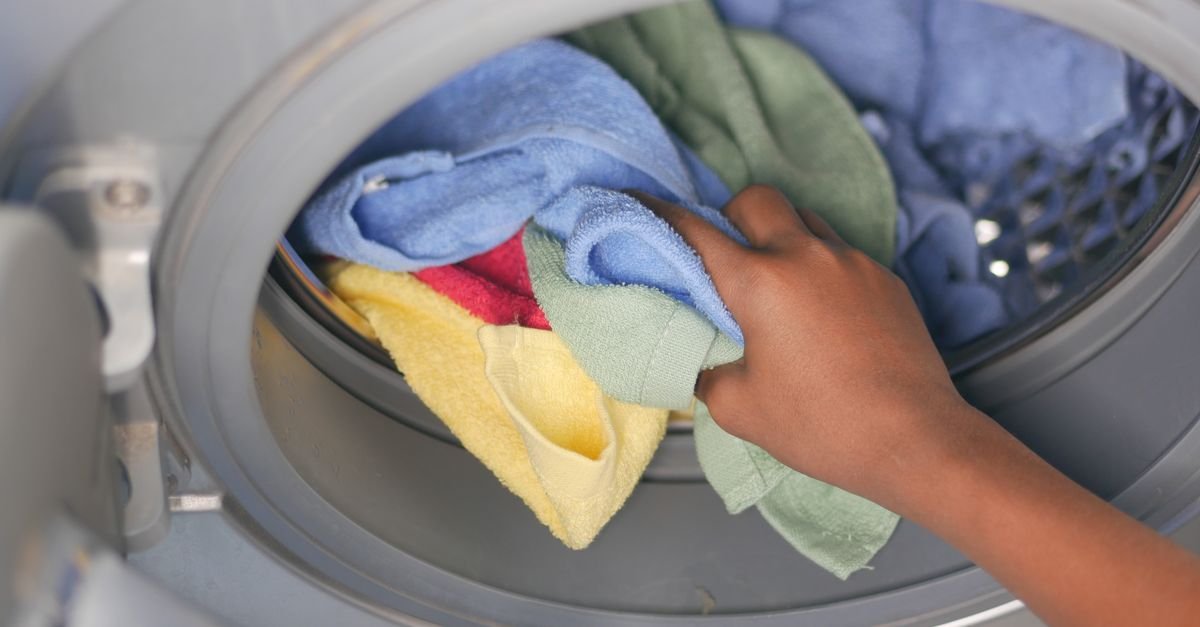
- Spread out wet towels. Hang towels so air can reach both sides instead of leaving them bunched on the floor, over a hamper, or against a wall.
- Remove standing water. Use a squeegee or towel on the shower door, ledge, or floor where water remains. This does not replace ventilation, but it reduces the amount of water that must evaporate into the room.
- After the fan has run, open the door farther if needed. If the bathroom still feels humid and outdoor air is reasonably dry and comfortable, opening the door or window can help. Avoid opening a window during periods of high outdoor humidity, extreme temperatures, poor air quality, or heavy pollen; EPA advises considering those conditions before increasing outdoor-air ventilation.[3]
Post-shower moisture-control checklist
- Fan on during the shower
- Door positioned to allow effective airflow; leave it ajar if suction weakens when closed
- Fan left on for at least 20 minutes afterward
- Towels spread out to dry
- Water wiped from shower surfaces or floor
- Door or window opened afterward only when outdoor conditions make sense
How to tell whether the exhaust fan is helping
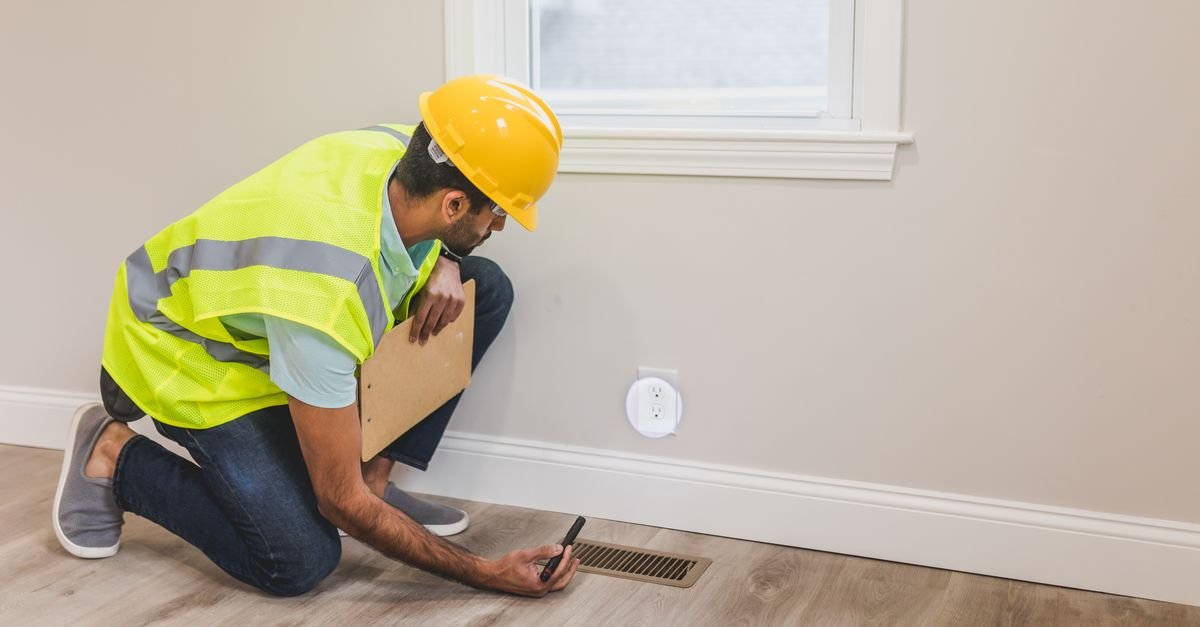
A fan making noise is not proof that it is exhausting enough air. Hold a single sheet of toilet paper or a very light tissue near the grille while the fan is running. Some suction suggests that air is moving, but this quick check cannot measure the fan’s actual airflow.
Also look for these warning signs:
- The mirror, ceiling, or walls remain wet long after the shower.
- The bathroom becomes foggy even when the fan is running.
- The fan sounds strained, rattles, or has become noticeably quieter.
- Dust and lint are visible on the grille.
- There is no noticeable airflow at the exterior vent termination, if it is safely visible from the ground.
- The fan appears to discharge into an attic, crawl space, or another interior area.
Bathroom exhaust air should go directly outdoors, not into an attic or crawl space. The International Residential Code provides model-code context for bathroom exhaust rates, including 50 cubic feet per minute for typical intermittent operation and 20 cubic feet per minute for continuous operation. Local adoption, amendments, and requirements vary by jurisdiction, so these figures are not a determination of what applies to a particular home.[4]
Clean the fan grille before assuming you need a new fan
Dust on the grille can restrict intake. Turn the fan off, remove and clean the grille according to the manufacturer’s instructions, and inspect the visible housing for dust. Cleaning is a reasonable maintenance step, but it cannot confirm that the fan, duct, or exterior termination is operating properly.[5]
Do not force the grille, reach into moving parts, or remove electrical components as part of a routine cleaning. If the fan is damaged, the wiring looks unsafe, or the housing is difficult to access, stop and use a qualified professional.
Check where the fan exhausts
A bathroom fan that discharges into the attic may remove air from the room while transferring moisture into the building assembly. That can contribute to damp insulation, wood deterioration, or mold in concealed areas. EPA and DOE guidance both emphasize that bathroom exhaust should terminate outdoors rather than in an attic or crawl space.[1] [6]
If you can safely identify the exterior termination from the ground, look for a vent hood that opens while the fan runs. Do not climb onto a roof or use a ladder just to inspect it. If the fan has always seemed ineffective, the duct may be disconnected, kinked, excessively long, blocked, or poorly terminated. Those conditions are better evaluated during a professional service call, especially if accessing the duct requires attic or roof work.
When behavior changes are not enough
Consider a ventilation problem rather than a showering-habit problem when the bathroom remains damp despite the routine above. An upgrade may be worth discussing if:
- The existing fan is noisy enough that nobody leaves it running.
- The room has no exhaust fan and cannot be ventilated adequately with a window.
- The fan grille has been cleaned but airflow remains weak.
- Condensation appears on the ceiling, walls, or pipes repeatedly.
- Musty odors return quickly after cleaning.
- Moisture is present even when nobody has recently showered.
Persistent moisture without a recent shower can indicate a plumbing leak, a roof or exterior-wall problem, a wet crawl space, or high humidity elsewhere in the home. EPA recommends fixing leaks and controlling indoor humidity.[1] CDC guidance says keeping indoor humidity no higher than 50% can help prevent mold growth.[7] A small hygrometer can help show whether the problem is limited to the bathroom or affects the home more broadly.
What not to rely on
- A dehumidifier alone: It may help with whole-home humidity, but it does not correct a bathroom fan that exhausts into the attic or fails to capture shower moisture at the source.
- A scented spray: Fragrance can mask a musty odor without addressing the moisture that causes it.
- Repeated surface cleaning: Cleaning helps, but recurring mold or mildew requires correcting the moisture problem as well.[7]
- A fan that only recirculates air: Moving humid air around the bathroom is not the same as exhausting it outdoors.
If you are already dealing with recurring grout discoloration, use the moisture routine alongside a careful cleaning approach. Our guide to cleaning bathroom grout without damaging it explains when cleaning is appropriate and when deteriorated caulk needs attention.
The practical takeaway
Start with the low-cost sequence: fan on during the shower, door positioned to allow effective airflow, fan on for at least 20 minutes afterward, towels spread out, and visible water removed. If the bathroom still stays damp, investigate the fan’s cleanliness, airflow, and outdoor termination before buying equipment. Moisture that persists without recent showering deserves a broader leak and humidity check rather than another round of surface cleaning.
Sources
- What are the main ways to control moisture in your home? — U.S. Environmental Protection Agency
- Indoor airPLUS Certified Version 2 Verification Requirements — U.S. Environmental Protection Agency
- Biological Contaminants and Indoor Air Quality — U.S. Environmental Protection Agency
- 2024 International Residential Code, Chapter 15: Exhaust Systems — International Code Council
- Measure Guideline: Selecting Ventilation Systems for Existing Homes — U.S. Department of Energy
- Job Aid 18-1: Install Exhaust Fan Flex Duct — U.S. Department of Energy
- Mold — Centers for Disease Control and Prevention