The reason backyard decluttering often fails is that homeowners start moving things before they've decided what each item actually needs: use, disposal, or storage. The fix is to set up three sorting zones first, then touch nothing until you can place it in one of them.
Set up three zones before you move anything
Professional declutterers recommend choosing a sunny day so you can spread items out and see what you actually have, then creating separate zones for different categories before you start sorting.[2] For a backyard, three zones work well:
- Active use: tools, pots, and furniture you've used in the last year and will use again.
- Disposal: broken, rusted, or unsalvageable items headed for the trash, recycling, or donation.
- Storage decision: items you're unsure about, seasonal gear, or things that need a home before you decide their fate.
Store smaller sorted items in clear plastic boxes with labels once you've grouped them, rather than letting everything pile back into one heap.[2]
A decision flowchart for garden items
Second-guessing every pot, tool, and ornament is what stalls most decluttering sessions. Work through each item with this sequence instead of debating it from scratch:
- Is it broken or beyond repair? Broken furniture pieces and outdated or run-down decoration items are usually the easiest categories to clear first, since they take up the most space and form unappealing focal points.[1] If you won't realistically fix it, it goes to disposal.
- Have you used it in the past year? If yes, it goes to active use. If no, move to the next question.
- Could it be repaired or repurposed quickly? Broken or rarely used structures like trellises, arbors, and gazebos don't have to be thrown away. Repairing them and adding a fresh coat of paint can turn them from clutter into decor pieces.[1] If a quick fix is realistic, it goes to storage decision for now. If not, it goes to disposal.
- Is it a duplicate or surplus supply? Outdoor supplies and tools such as soil, mulch, and plant food can take up valuable space if you've stocked up more than you need, such as after a sale.[1] Keep what you'll use this season and move the rest along, whether that's using it up, giving it away, or discarding it if it's degraded.
- Is it a pot or container? Flower pots accumulate quickly in a garden. Pick your favorites, and dispose of or rehome old plastic ones sustainably rather than storing all of them indefinitely.[2]
- Is it a plant that isn't thriving where it is? This isn't a disposal decision by default. If a plant is struggling due to shade, soil, or crowding, consider moving it to a better spot or gifting it. Overcrowded perennials and ornamental grasses can be divided, which tidies the garden and gives you free plants to use elsewhere.[2]
Running every item through this sequence once prevents the common trap of picking something up, hesitating, and setting it back down in a slightly different pile, which just relocates the clutter instead of resolving it.
Clear organic debris separately from "stuff"
Fallen branches, leaves, and dead plants are a different category entirely and don't belong in your three sorting zones. A tidy garden free of this debris looks better and helps prevent pests and diseases from settling in.[2] Where you have the space, a simple compost bin accepts leaves, grass clippings, and plant debris and turns them into usable material for the garden, and some communities offer brush collection programs for larger woody debris.[3]
Deal with the shed and storage area last
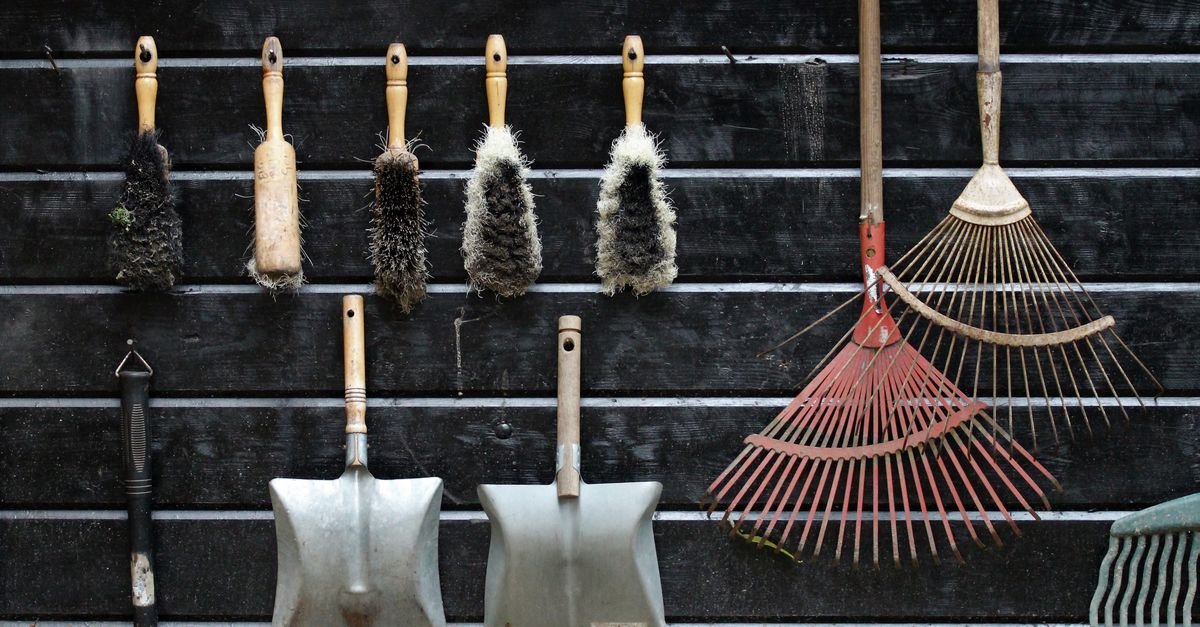
Garden sheds often double as dumping grounds for tools, toys, and outdoor furniture that didn't fit anywhere else.[2] Tackle this space after you've sorted the open yard, since many of the items you pull out of storage will already have a clear destination once you apply the same flowchart. Going through tools, twine, gloves, and similar essentials at this stage helps you see what you actually own, so you're not tempted to buy duplicates on your next trip to the garden center.[2]
Keep it from piling back up
Decluttering is the harder, concentrated part of the work; maintaining it afterward is mostly about consistency rather than another big push.[3] A short seasonal pass using the same three zones, active use, disposal, and storage decision, keeps new clutter from accumulating the way the original mess did.
If you're setting up dedicated storage for tools as part of this process, see our guide on building a home tool kit without overspending. And if part of your backyard clutter is patio cushions or furniture pulled out of storage, check why patio cushions get moldy in storage before you put them back away.
Sources
- How to declutter a backyard: 12 expert tips for a relaxing spot — Homes & Gardens
- 7 Decluttering Garden Tasks To Tackle This Spring — Country Living
- How to Declutter Your Backyard and Garden: Step-by-Step — Riehl Structures